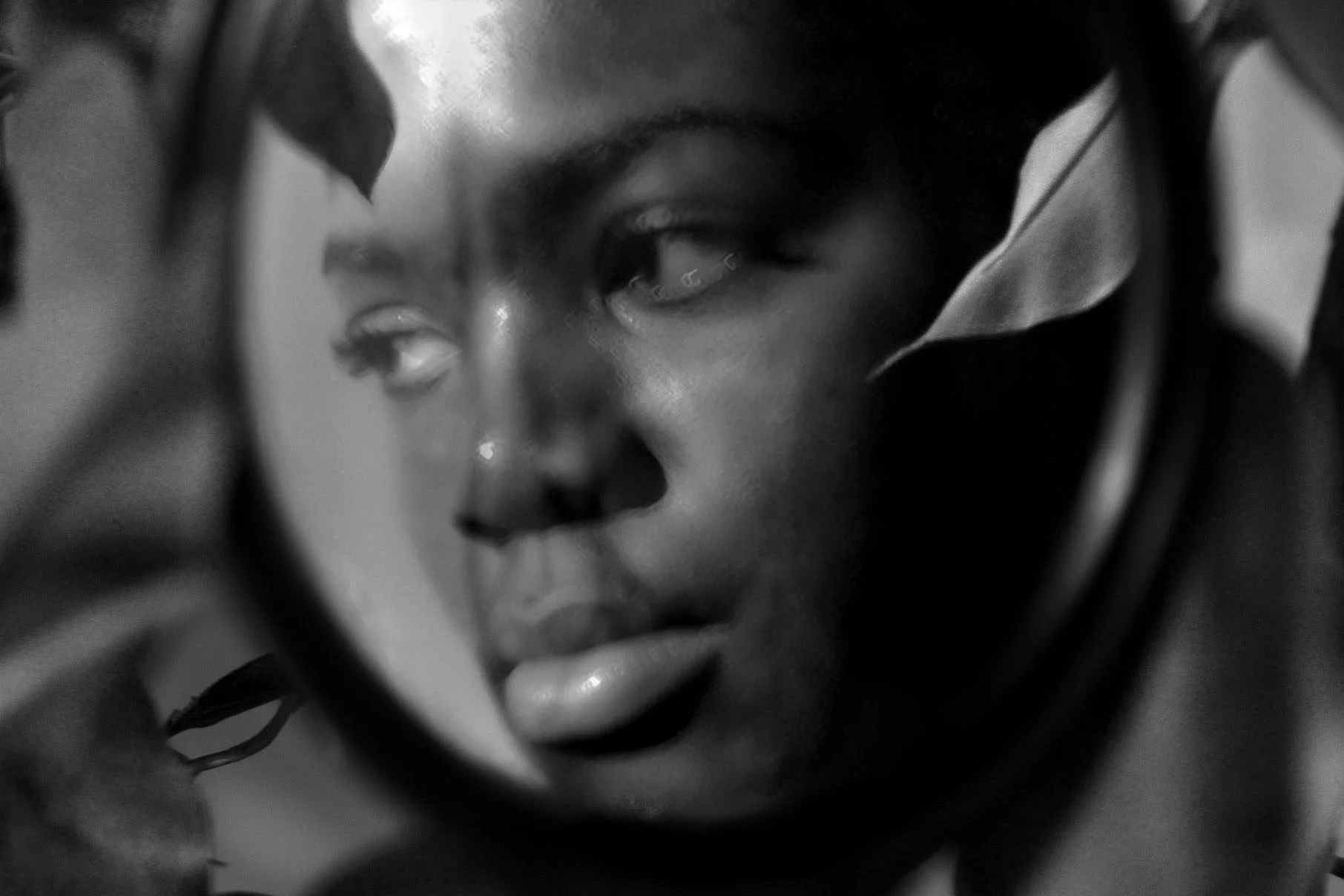
“Self Titled”
This self-portrait photography project explores identity through controlled studio composition and intentional framing. I was responsible for the full process, including concept development, lighting setup, camera operation, and directing my own pose to achieve the desired mood. The image centers on a quiet, introspective expression, using shadow and negative space to create a sense of depth and subtle tension. Through this work, I strengthened my technical understanding of lighting and composition while also learning how to translate internal emotion into a visual form.
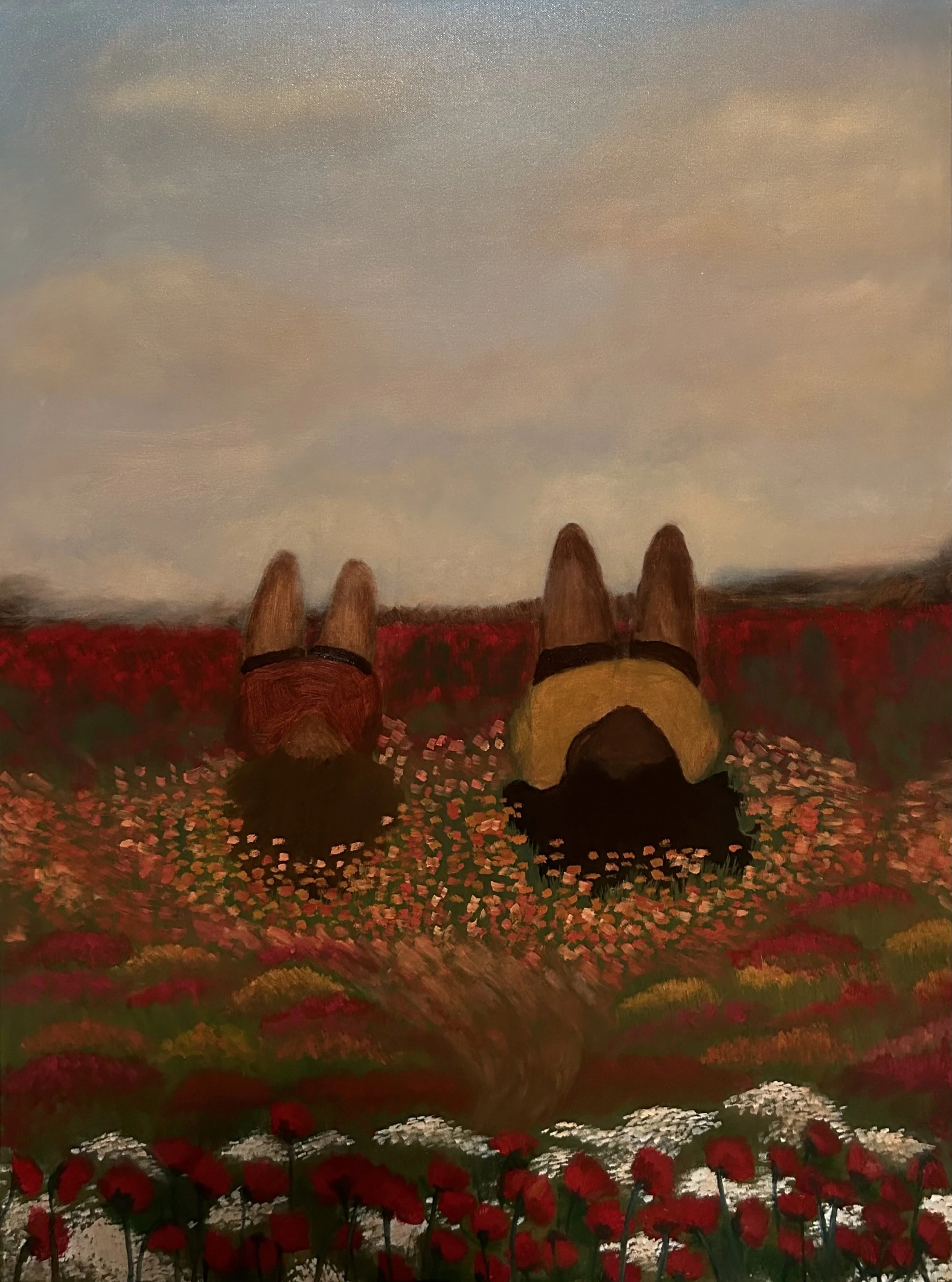
The oil painting centers on Black girlhood, exploring identity, softness, and resilience through layered color and texture. I developed the concept and composition, using oil paint to build depth and emphasize emotion through skin tone, light, and contrast. The work demonstrates my skills in color mixing, and composition, with a focus on capturing presence rather than perfection. Through this piece, I learned how material choices and visual symbolism can hold personal and cultural narratives in a powerful way.
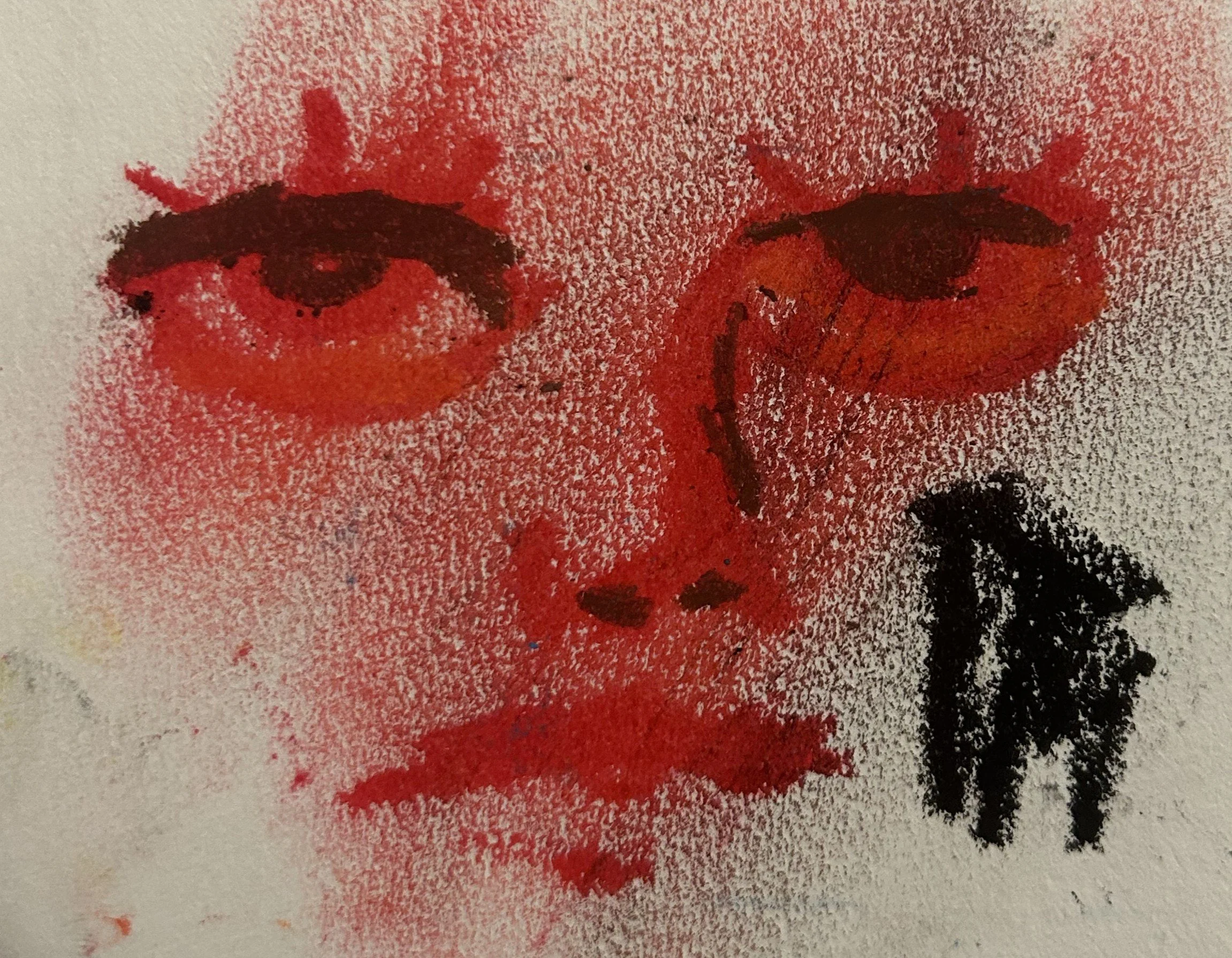
(Click here for Capstone)
This podcast I created explores social issues across America with a focus on the Black experience, blending conversation and critical reflection. I was responsible for the lighting and sound design, helping shape both the visual tone and audio clarity of the production to support the emotional weight of the discussion. Through this role, I applied technical skills in lighting setup, audio balancing, and live production support to ensure a professional and immersive viewing experience. I learned how sound and lighting work together to enhance storytelling and guide audience attention in dialogue-driven media.
This capstone project examines how Nickel Boys challenges and reconfigures the cinematic representation of Black bodies, particularly within the historical context of institutional violence and visual storytelling. By analyzing the film’s formal choices such as perspective, cinematography, and narrative structure the paper argues that Nickel Boys resists traditional modes of Black representation that often position Black bodies as objects of suffering for visual consumption. Instead, the film reframes visibility as an ethical and experiential space, where perception itself becomes unstable and morally charged. Drawing on film theory and cultural criticism, the project situates Nickel Boys within a broader discourse on Black visuality and cinematic authorship, exploring how the film disrupts voyeuristic frameworks embedded in classical and contemporary cinema. Ultimately, the paper contends that Nickel Boys offers a reimagined cinematic language that centers interiority, subjectivity, and historical consciousness, shifting how audiences are invited to see and interpret Black life on screen. This analysis contributes to ongoing conversations about representation, spectatorship, and the political possibilities of form in film.
This capstone project critically analyzes Nickel Boys and its approach to reshaping the depiction of Black bodies in cinema. I developed the research question, conducted close textual analysis, and engaged with film theory to support my argument about visibility, subjectivity, and cinematic ethics. The project demonstrates skills in academic writing, critical analysis, and synthesis of theoretical frameworks with visual media. Through this work, I learned how formal film choices can actively challenge dominant narratives and reshape how audiences engage with Black representation on screen.